
West Falls Center for the Arts
2025 Annual Performance Report
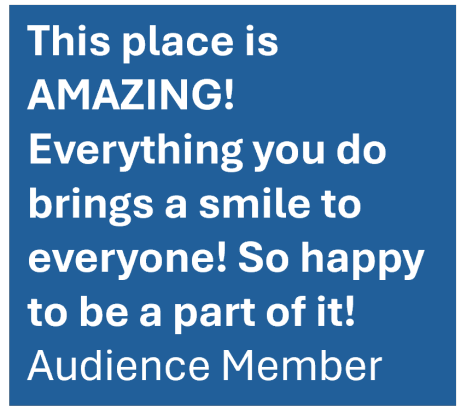
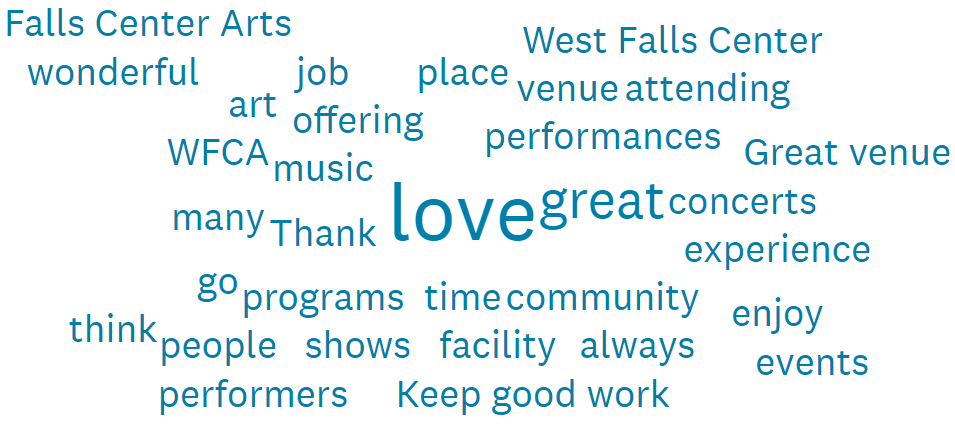
“Such a welcoming place filled with music, friendship, and community. It lifts the spirit every time.”
”West Falls Center for the Arts is the best!! A great asset to the community”
Annual Audience Survey 2025
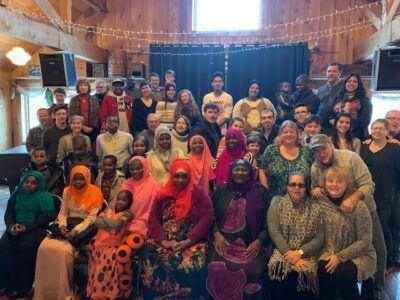
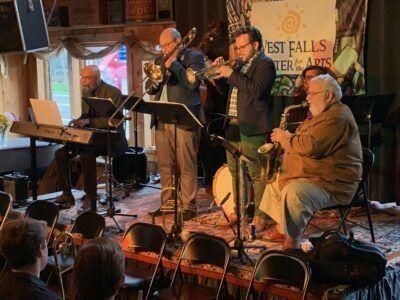
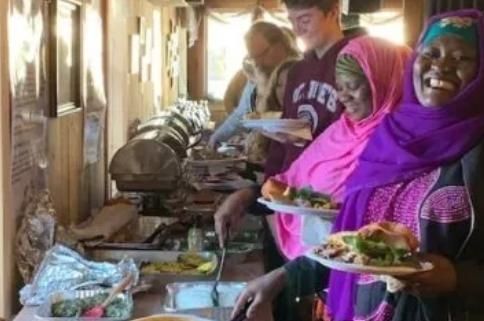
WFCFA serves vulnerable WNY populations by increasing access to cultural, mental health, and social programming, including services for youth; veterans; refugees; isolated adults; individuals with disabilities; caregivers of loved ones with dementia, Alzheimer’s, and intellectual disabilities; and urban and rural communities.
WFCFA Statistics
- Audience Size: 20,000
- Number of Concerts: 240
- Largest Population Served: Caregivers and
- Loved Ones with Dementia and/or Alzheimer's
- Off Site Locations: 11 locations (up from 6)
- Capital Improvements (funding secured):
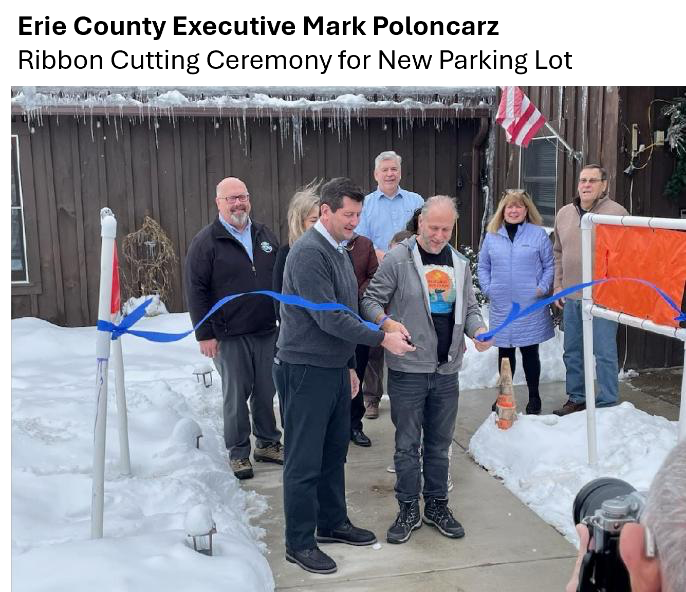
- Parking Lot & Kitchen ($249,000 Erie County
- Capital Grant) and beginning outdoor venue
- ($1.2 million)
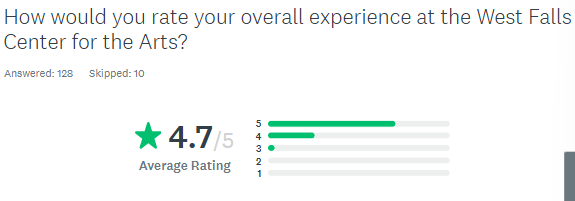
- Audience Satisfaction: 4.7 Stars out of 5 Stars four years running
History of Accomplishments
- In 2025, WFCFA secured the NY Forward grant at $1,200,000 for an outdoor amphitheater, shelter, trails, and improvements to the main building. This project will create year-round funding a potentially add another 10,000 to 15,000 additional audience attendees.
- In 2025, WFCFA received a grant from the from the Health Foundation of Western and Central New York to expand Musical memories café into the Central New York region with 2 additional sites.
- In 2024, WFCFA Musical Memories
- Café was recognized as a National
- Innovative and Exemplary Respite
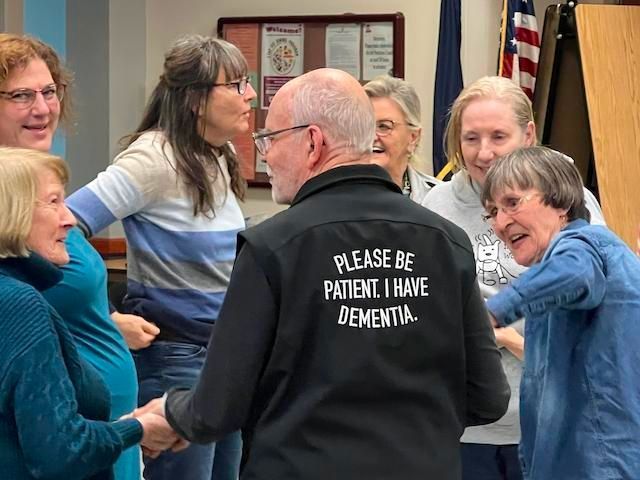
- Program by ARCH National Respite Network, one of only 4 recipients in the nation.
- In 2024, WFCFA was accepted to present on the Musical Memories Café program and impact at the 2024 National Lifespan Respite Conference: Raising the Bar for Respite.
- In 2023, the Exhale Program by the Ralph C. Wilson Jr. Foundation, Health Foundation of Western and Central NY, and The Boston Foundation (MA) awarded WFCFA with a Technical Assistance Contract to assist other organizations launching respite programs across the region.
- In 2022, WFCFA was recognized as a Rising Star by the Arts Services Initiative of WNY for the work it does to expand cultural programming to vulnerable communities and development of programs for special populations.
Executive Summary
2025 marked a year of extraordinary growth and achievement for West Falls Center for the Arts (WFCFA), reinforcing its reputation as one of Western New York's most innovative and inclusive community arts organizations. Through its award-winning programming, strategic expansion, and commitment to connection through music, WFCFA continued to enrich lives, strengthen community bonds, and expand access to cultural experiences across urban, rural, and underserved regions.
Highlights of Findings
- Strong Community Impact: WFCFA served more than 20,000 attendees through 240 concerts and programs,
- reaching caregivers, veterans, individuals with disabilities, and isolated older adults across eight locations.
- Sustained Excellence: For the fourth consecutive year, audiences rated WFCFA 4.7 out of 5 stars for overall experience, with 99,100% reporting satisfaction with staff, programming, facilities, and talent.
- Major Capital Advancement: The organization secured a $1.2 million NY Forward grant to begin construction of an outdoor amphitheater, pavilion, and trail system, an investment expected to attract an additional
- 10,000,15,000 visitors annually and create year-round engagement opportunities.
Programmatic Achievements:
- Musical Memories Café (MMC) continued its national leadership as an ARCH National Respite Network Innovative and Exemplary Program, with 91% of participants reporting improved emotional well-being and 100% reporting reduced stress.
- The Veterans and First Responders Music Program achieved exceptional results, 100% of participants agreed or strongly agreed that the program improved confidence, emotional health, and connection to others.
- Financial and Audience Growth: Revenue grew to $374,602, marking a fivefold increase since 2019. Audience engagement rose from 1,800 in 2018 to 20,000 in 2025, reflecting WFCFA's expanding regional footprint.
- Community Vision for the Future: Survey respondents expressed enthusiasm for the Outdoor Concert Cove, with top interests including venue rentals (26%), summer concert series (18%), and music showcases (15%), underscoring strong public anticipation for this next phase of growth.
Conclusion
The 2025 findings affirm WFCFA's role as a catalyst for connection, creativity, and community healing. Its programs not only uplift vulnerable populations but also demonstrate how the arts can drive measurable well-being, civic pride, and regional revitalization. With exceptional community support, a proven model for impact, and bold plans for the future, WFCFA stands poised to expand its reach and continue transforming lives through the universal language of music.
Annual Survey Key Findings
WFCFA examines its impact in several ways. First, we collect data to measure audience growth, reach, and program attendance. Second, we work with outside evaluation consultant Dr. Steve Harvey who creates evaluation protocols that assess satisfaction and change, growth, and impact over time.
Total Surveys: n=210
- 88% (2024 - 95%) Answered Very Important or Extremely Important to "How important is the West Falls Center for the Arts to your community?"
- Average, Above Average, or Outstanding Satisfaction on the following aspects of the WFCFA programs.
- 2025 (2024) (Yellow represents increase over previous year.) o 100% Staff (100%) o 99% Program Offerings (100%) o 99% Variety of Programs (100%)
- o 99% Facilities (96.4%) o 99% Talent (100%)
- The overall Rating of Experience at West Falls was 4.7 out of 5 stars. (4.7 in 2022, 2023, and 2024). This is a score that they have achieved for 4 years straight.
Revenue and Audience Growth
The above findings helped WFCFA to build MMC, secure an additional $294,000 in grant funding, and raise $79,648 in program services revenue to further evaluate, improve, and replicate the program across Erie County. In addition to programmatic impact, we also measure growth according to budget and audience size. Our fundraising, including grants and door receipts, has increased 5 times over the past three years from $27,040 (2018-19) and $116,318 (2019-20) to $121,434 (2020-21), $275,421 (2021-22), $317,456 (2022-23), and $374,602 (2023-24) in revenue.
Attendance has increased by 11 times from approximately 1,800 in 2018 to 20,000 in 2025. WFCFA expects that number to continue to grow as we expand our licensing program for Musical Memories Café (MMC) and expand our facilities to create an outdoor venue and partner with our neighbor, the Blueberry Treehouse Farm.
Impact as Reported by Audience
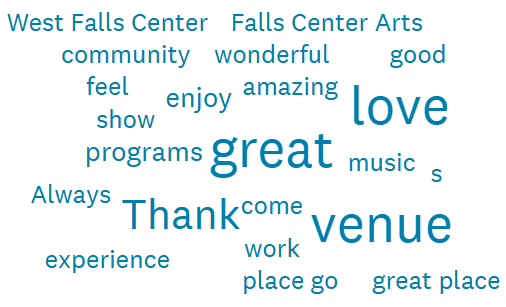
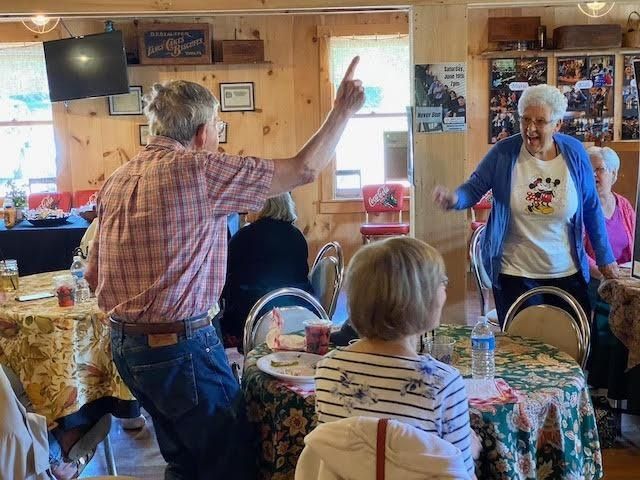
Audience members reported an incredibly positive experience with West Falls Center for the Arts.
2025
2024
Musical Memories Café – Restoring Connection Through the Power of Music

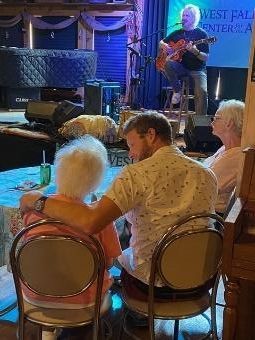
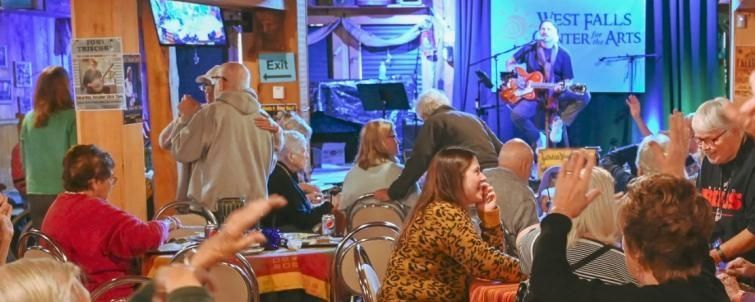
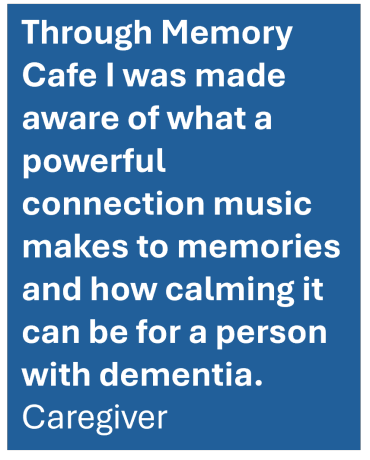
Musical Memories Café (MMC) is an award-winning, community-based program that uses live music to spark joy, memory, and connection for individuals living with dementia and their caregivers. Unlike traditional respite programs, MMC invites caregivers and loved ones to participate together, singing, dancing, and sharing moments that rebuild emotional bonds and ease stress.
Each session features professional musicians and incorporates the Caregiver Stress Assessment to connect families with vital supports. Recognized nationally by the ARCH National Respite Network as an Innovative and Exemplary Respite Program, MMC transforms music into medicine for the soul, restoring dignity, joy, and human connection through the universal language of song. The following results are consistent with historical results and demonstrate the value that Musical Memories Café has for Caregivers.
As a result of attending Musical Memories café…
- …did your relationship with your loved one improve? 89%
- …did you experience activity and joy in your loved one during the session that you had not expected? 91%
- …did your overall physical health improve? 33%
- …did your overall emotional well-being improve? 93%
- …did you learn about new community resources? 73%
- …did you experience reduced stress? 100%
- …did you feel emotionally supported? 91%
- …did you feel that you became a better caregiver? 90%
- …did you build a network and friendships with other caregivers? 70%
- …did you feel better informed about caregiving and supporting your loved one? 78%
- Was the Musical Memories Cafe program beneficial to the overall well-being of your loved one? 83%
Veterans and First Responders Music Program
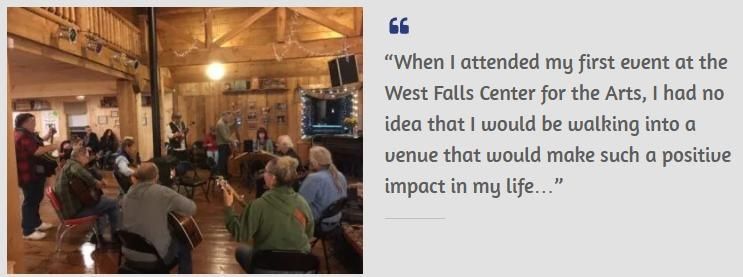
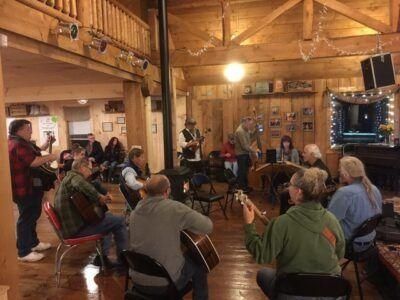
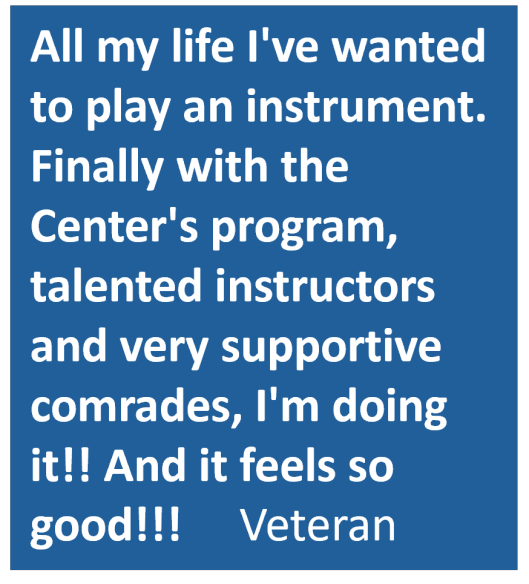
The Veterans and First Responders Music Program uses music as a powerful tool for healing, connection, and self-expression among those who have served their communities and country. Participants learn guitar, ukulele, or harmonica in small, peersupported groups led by professional musicians, many of whom are Veterans themselves. Through instruction, performance, and a new songwriting component, participants gain confidence, reduce isolation, and find meaningful ways to share their stories. The program fosters camaraderie, pride, and emotional well-being while helping Veterans and First Responders reconnect with themselves, each other, and their community through the transformative power of music. The following results are consistent with historical results and demonstrate the value that Veterans and First Responders Music Program has for participants.
Across each of the below questions, 100% of participants Agreed or Strongly Agreed.
- I feel more connected to other Veterans and/or First Responders because of this program. 100%
- My overall emotional well-being has improved because of participating in the program. 100%
- The program has helped me build confidence and pride in my abilities (such as learning an instrument, performing, or songwriting). 100%
- Participating in the music program has helped me express personal experiences or emotions in a meaningful way.
- I feel supported and encouraged by my fellow participants during sessions. 100%
- Through this program, I became more aware of community or Veteran services that can support me. 100%
- The program environment, including instructors and peers, made me feel safe, respected, and understood. 100%
- My participation in this program has had a positive impact on my life and outlook for the future. 100%
West Falls Center for the Arts Outdoor Amphitheater, Porch, Pavilion, Trails, and Sculptures
As West Falls Center for the Arts prepares to launch its new Outdoor Concert Cove, community feedback reveals strong enthusiasm for a vibrant mix of events that celebrate local creativity and culture. Survey results show that venue rental options (26%) and a summer concert series (18%) top the list of interests, reflecting both community engagement and demand for shared outdoor experiences. Participants also expressed excitement for music competitions and showcases (15%), arts festivals (12%), and cultural heritage events (7%), highlighting a desire for diverse programming that brings people together. Additional suggestions, including local talent performances, blues and Irish music events, farmers markets, and theater performances, illustrate the community's vision of the Outdoor Concert Cove as an inclusive, multi-use space where art, music, and connection thrive year-round.
- Venue Rental Options 26%
- Summer Concert Series 18%
- Music Competitions and Showcases 15%
- Arts Festivals 12%
- Cultural Heritage Festivals 7%
- Local Talent Performances 6%
- Blues Music Events 6%
- Food and Farmers Markets ^5
- Theater Performances 3%
- Irish Music Events 2%
Testimonials
- Continue to offer diverse genres of music. Consider having youth bands/groups perform.
- Keep up the OUTSTANDING work!
- I love this venue particularly because it is so unique & personal, as opposed to the "Big Box" venues.
- You are a perfect example of how the musical arts can entertain, help people and build community.
- bravo.
- The hearts of those who create and volunteer for the West Falls Center for the Art's, or any other similar group, is what most determines the positive impact on the larger community. I think that's why the West Falls Center for the Arts has done so much good.
- hank you for all the dedicated volunteers who make this project work as well as it does.
- It’s a magical place.
- est Falls Center for the Arts is an amazing venue!
- I’m thankful we have an establishment like this local to us.
- It’s a great place and all the people involved work hard to make it look so easy ! Great variety of shows!
Conclusion
2025 was a landmark year for West Falls Center for the Arts, a year defined by growth, recognition, and deepened community impact. From the continued success of the Musical Memories Café and Veterans and First Responders Music Program to the launch of the Outdoor Concert Cove, WFCFA has strengthened its role as a regional leader in arts, wellness, and inclusion. Audience satisfaction remains exceptional, partnerships have expanded, and every program continues to transform lives through creativity and connection. As WFCFA looks ahead, it does so with gratitude, optimism, and a steadfast commitment to using the arts to heal, inspire, and unite communities across Western New York and beyond.
Thank you to our Sponsors!
Musical Memories Café 2025 Annual Report
West Falls Center for the Arts
Program: Musical Memories Café
Grant Year: 2025
Submitted by: Carolyn Panzica, ED, West Falls
Center for the Arts
Date: December 2025
Evaluator: Steve Harvey, Ph.D., CECA, Inc. www.guideddecisions.com
Questions: Carolyn Panzica, ED, WFCFA

Introduction
On behalf of the West Falls Center for the Arts (WFCFA), we extend our sincere gratitude to MMC Funders for supporting our Musical Memories Café (MMC) program through the 2024-2025 Music and the Mind Grant Cycle. Your investment helped us expand this nationally recognized initiative into five new locations across Western and Central New York, bringing the healing power of music to more caregivers and loved ones living with dementia, Alzheimer's disease, and other cognitive challenges.
Thanks to our funder partnership, we strengthened WFCFA's mission to use live music and creative expression to connect, heal, and inspire. What began as a single local program is now a regional model for community-based respite, serving hundreds of families and reducing isolation among some of the most vulnerable members of our communities.
Current Caregiver Challenges
Across the United States, the caregiving landscape has entered a period of significant strain marked by demographic shifts, rising care complexity, and insufficient structural supports. According to the AARP and National Alliance for Caregiving's 2023 report Caregiving in the U.S., more than 53 million Americans now serve as unpaid caregivers-an increase of nearly 10 million since 2015. Approximately 65% of these caregivers are women, and the majority provide care for aging family members while simultaneously maintaining employment. This dual responsibility contributes to elevated stress, reduced income stability, and long-term health risks.

Recent research published in The Gerontologist by Reinhard and colleagues (2023) found that nearly 60% of dementia caregivers report clinically significant emotional distress, with over onethird meeting criteria for depression. These burdens are especially acute for rural caregivers, who face geographic isolation, fewer respite options, and limited access to specialized health services. The New York State Office for the Aging (2024) noted that caregivers in rural regions are twice as likely to report unmet respite needs compared to their urban counterparts, underscoring the importance of community-based interventions such as Musical Memories Café.
Caregiving intensity is also increasing as individuals live longer with chronic and cognitive conditions. The Alzheimer's Association's 2025 Facts and Figures report estimates that more than 6.9 million Americans age 65 and older live with Alzheimer's disease, a number projected to rise to nearly 13 million by 2050. The organization emphasizes that unpaid caregivers provided an estimated 18.4 billion hours of care in 2024, valued at $345 billion. These figures illustrate both the magnitude of unpaid labor and the urgent need for psychosocial and policy innovations that alleviate the caregiver burden.

In addition to emotional and financial strain, structural inequities play a critical role in caregiver outcomes. The National Academies of Sciences, Engineering, and Medicine (2022) identified systemic disparities in access to culturally competent caregiver support, noting that women of color and low-income caregivers often face compounded barriers. Public policy responses have begun to emerge: the federal RAISE Family Caregivers Act (2023 implementation phase) and New York State's Master Plan for Aging (2025) both prioritize respite access, workplace flexibility, and integration of caregiver well-being into health and aging policy. Programs like Musical Memories Café align directly with these priorities, serving as an operational model of the type of communitybased, evidence-informed respite care these policies aim to scale.
Finally, the COVID-19 pandemic has had lingering effects on caregiver health and connection. Studies in JAMA Network Open (Gaugler et al., 2023) found that caregivers of people with dementia experienced sustained declines in social engagement and increased reports of anxiety and loneliness even after pandemic restrictions were lifted. These findings reinforce the importance of programs that restore social connection and emotional resilience-two outcomes consistently demonstrated by the Musical Memories Café since 2022.
In this context, WFCFA's expansion of MMC is not only a programmatic success but a timely public health intervention. Its proven capacity to reduce stress, enhance emotional well-being, and connect caregivers to resources responds directly to the demographic and policy imperatives defining caregiving in the twenty-first century.
References
AARP & National Alliance for Caregiving. (2023). Caregiving in the United States 2023. Washington, DC: AARP Research.
Alzheimer’s Association. (2025). 2025 Alzheimer’s disease facts and figures. Alzheimer’s & Dementia, 21(3), 324–403. https://doi.org/10.1002/alz.13852
Gaugler, J. E., Yu, F., & Kane, R. L. (2023). Caregiver well-being and social isolation in the aftermath of COVID-19: Longitudinal findings from dementia caregiving households. JAMA Network Open, 6(4), e2310234. https://doi.org/10.1001/jamanetworkopen.2023.10234
National Academies of Sciences, Engineering, and Medicine. (2022). Families caring for an aging America: Progress and policy directions. Washington, DC: The National Academies Press.
New York State Office for the Aging. (2024). Supporting caregivers in rural New York: Needs assessment and policy brief. Albany, NY: NYSOFA.
Reinhard, S. C., Given, B., & Quinn, C. (2023). Emotional distress and unmet needs among family caregivers of older adults with dementia. The Gerontologist, 63(5), 947–958. https://doi.org/10.1093/geront/gnad056
U.S. Department of Health and Human Services. (2023). RAISE Family Caregivers Act: Initial implementation plan and updates. Washington, DC: Administration for Community Living.
Program Overview
Musical Memories Café
is a community-based, evidence-informed respite program that pairs live music with caregiver support and social connection. Each session features professional musicians performing familiar songs that encourage singing, dancing, and joyful engagement, often sparking remarkable moments of memory and emotion. Caregivers and their loved ones participate together, strengthening relationships and reducing stress through shared experience.

Through our funder support, MMC was able to:
- Expand from 6 to 11 sites statewide, including new replication programs in Tompkins, Cattaraugus, and Onondaga Counties.
- Train local facilitators in trauma-informed, dementia-sensitive practices using WFCFA's Caregiver Stress Assessment (CSA) framework.
- Provide 120+ live sessions that reached more than 600 participants in 2025.
- Develop a peer-learning community among site coordinators to ensure program fidelity, data collection, and sustainable replication.
Key Outcomes and Impact
Recent evaluation results from our 2025 Annual Performance Report confirm MMC's powerful and consistent impact:
- 100% of participants reported reduced stress following Café participation.
- 93% reported improved emotional wellbeing.
- 89% said their relationship with their loved one improved.
- 73% learned about new community resources and supports.
- 83%
indicated that MMC improved their loved one's
overall well-being.

These outcomes align with four years of data showing MMC's exceptional effectiveness as a musicbased intervention that enhances both caregiver and care recipient quality of life.
In addition to measurable gains, participants frequently describe MMC as "a lifeline" that restores hope and joy to families navigating the daily challenges of caregiving. Many caregivers have remained connected long after attending, forming friendships and informal support networks that extend beyond the Café itself.
Musical Memories Café: Years of Impact (2022-2025)
Since its inception, Musical Memories Café (MMC) has consistently demonstrated measurable, meaningful, and lasting impact on caregivers and their loved ones living with dementia, Alzheimer's disease, and other cognitive challenges. Building on the 2022 evaluation conducted by CECA, Inc. and the New York Academy of Medicine, MMC has evolved from a promising local initiative into a nationally recognized model for community-based respite and connection.
Caregiver and Loved-One Well-Being
From 2022 through 2025, MMC has maintained extraordinary outcomes in reducing caregiver stress and improving emotional health.
- In 2022, 100% of caregivers reported reduced stress and emotional support from Café participation.
- In
2025, that success continued with
100% again reporting reduced stress and 93% reporting improved emotional well-being.
This sustained performance across three years demonstrates that MMC's trauma-informed, musicbased model produces consistent results even as the number of sites and participants has grown exponentially.
Strengthening Relationships
One of the earliest and most profound outcomes identified in 2022 was MMC's ability to strengthen bonds between caregivers and their loved ones. That year, 100% of participants said MMC improved their relationship with the person they care for. By 2025, with a fivefold increase in total participants, 89% still reported stronger relationships, confirming that MMC's relational benefits are both scalable and durable.
Caregivers frequently describe MMC as "a lifeline" and a space where they can reconnect emotionally, rediscover shared joy, and feel less alone in their caregiving journey, sentiments that echo the same language used in early program interviews in 2022.

Connection to Community and Resources
Over time, MMC has increasingly become a bridge between caregivers and vital community supports.
- In 2022, two-thirds (66%) of participants said MMC helped them find local resources for themselves or their loved ones.
- By 2025, that number rose to 73%, reflecting targeted follow-up to one of the original 2022 evaluation recommendations: improving linkages to transportation, home maintenance, social support, and respite services.
The growth in this measure indicates that MMC's peer learning network and facilitator training model are not only sustaining the program but also strengthening its community integration year after year.
Reducing Caregiver Burden
The 2022 Caregiver Intensity Index revealed that "no time for you" and "feeling stressed or depressed" were the most common caregiver intensity drivers. MMC's subsequent introduction of a targeted intervention framework directly addressed these drivers by embedding reflective practices, support referrals, and wellness education into each Café session.
By 2025, qualitative reports and survey data show that caregivers experience
greater self-awareness, reduced isolation, and improved ability to manage stress, validating MMC's responsiveness to early evaluation findings and its commitment to continuous improvement.


Scaling with Quality
Perhaps most striking is MMC's ability to preserve quality outcomes while expanding access. Between 2022 and 2025, MMC grew from 6 to 11 program sites, adding partners in Tompkins, Cattaraugus, and Onondaga Counties and serving more than 3,300 caregivers and loved ones annually. Despite this rapid growth, every measure of caregiver and participant benefit has remained at or above the strong baseline established in 2022.
This trajectory-from a pilot program to a regional model-shows MMC's success in translating evaluation data into replicable design. Each new site now operates with local ownership, trained facilitators, and technical support from WFCFA, ensuring both fidelity and flexibility across diverse communities.

A Proven and Evolving Model
Over four years, MMC has evolved from a single community offering to a data-driven, evidenceinformed statewide initiative. Each year's evaluation cycle has informed the next, producing a continuous loop of learning, refinement, and impact.
As WFCFA continues to expand MMC into new communities and integrate new music therapy evaluation tools with university partners, the lessons of 2022 remain at its core: build connections, reduce stress, and give caregivers-and their loved ones-the healing power of joy through music.
Expansion Success
In 2025, WFCFA launched replication partnerships with libraries, arts centers, and faith-based organizations to ensure MMC's accessibility and sustainability. Each new site was equipped with startup guidance, facilitator training, and ongoing technical assistance.
This expansion not only grew MMC's geographic reach but also deepened community ownership, embedding music-based respite into local infrastructure in both rural and urban areas. The new sites now host monthly or quarterly sessions, supported by local musicians and volunteers, ensuring that caregivers and loved ones can participate without barriers related to transportation or cost.
The success of this expansion has attracted the attention of statewide funders and health networks, positioning MMC as a replicable, scalable model for arts-based health innovation.

Sustainability and Next Steps
Building on funder support, WFCFA continues to pursue a hybrid funding model that blends philanthropy, community sponsorships, and licensing partnerships. With additional support, we plan to:
- Further expand MMC to reach 20 total sites statewide by 2026-27,
- Integrate music therapy evaluation tools in collaboration with university partners, and
- Continue disseminating data that advances the national dialogue on the link between music, memory, and mental well-being.
The upcoming completion of our Outdoor Concert Cove (Fall 2026), a new $1.2 million venue funded through the NY Forward program, will also provide opportunities to host Musical Memories Café festivals and large-scale caregiver celebration events, expanding the program's visibility and reach.
Voices of Caregivers
The most powerful measure of Musical Memories Café's impact comes directly from the caregivers themselves. Their stories reveal how the simple act of gathering around music restores connection, dignity, and emotional balance in lives often defined by exhaustion and isolation. Each testimonial reflects the program's core mission-to use music as a bridge back to joy, identity, and community. Together, these voices tell the story of a program that not only improves outcomes but changes lives.
MMC Participants, 2025 Annual Evaluation.
"When the music starts, the worry stops. For that hour, we're not caregiver and patient, we're just us again. Musical Memories Café gave us back something we thought we'd lost."
"The Café is a lifeline. It's not just an event; it's a place where I can breathe again, see my husband smile, and remember that joy still exists in our story."
"Before the Café, I didn't know where to turn. Now I have friends, support, and a reason to get out of the house. The music brings us together, but it's the people who keep us coming back."
"The Café gives me something no medication or manual ever could, a moment of normal life. I see my mom light up when she hears her favorite song, and in that moment, everything feels right."
"Musical Memories Café reminds me that taking care of myself matters, too. It's the one place where I feel seen, supported, and understood. I leave every session lighter and stronger."
These voices underscore the essence of Musical Memories Café: it is more than a respite program, it is a community of healing. Each story affirms that music has the unique power to reconnect hearts, reduce the weight of caregiving, and renew the human spirit.


Conclusion
The Musical Memories Café has become a vital, evidenceinformed response to one of the most pressing health and social issues of our time-the growing crisis facing family caregivers. Since 2022, the program has consistently demonstrated measurable reductions in caregiver stress, improved emotional well-being, and stronger relationships between caregivers and their loved ones. Through the universal language of music, MMC provides not only respite but also reconnection, allowing caregivers to rediscover moments of joy and mutual recognition that often fade under
the weight of long-term care. What began as a small community initiative has evolved into a statewide model that restores dignity, builds resilience, and reminds families that they are not alone.
As the nation confronts rising caregiving intensity, aging demographics, and widespread emotional strain, the significance of MMC's outcomes has never been clearer. The program directly addresses the documented challenges identified by the AARP and National Alliance for Caregiving, the Alzheimer's Association, and the New York State Office for the Aging-particularly the need for accessible respite, community support, and emotional recovery. MMC's approach aligns seamlessly with emerging policy priorities such as the RAISE Family Caregivers Act and New

York's Master Plan for Aging, serving as a living demonstration of how community arts can fill critical gaps left by traditional health systems.
By combining live performance, peer connection, and trauma-informed practice, MMC transforms music into a tool for healing and public health advancement.
Looking ahead, the continued expansion of MMC across New York represents more than programmatic growth-it symbolizes a commitment to addressing caregiver isolation and burnout at their roots. Each Café session reflects a convergence of art, empathy, and innovation that responds to the realities caregivers face every day. In an era when 53 million Americans provide unpaid care, the impact of Musical Memories Café extends beyond participants; it serves as a model for how creativity, compassion, and community can come together to solve complex health challenges. Thanks to our funders, partners, and dedicated facilitators, the healing power of music will continue to resonate, bringing hope, connection, and renewed strength to caregivers across the state.

Red Accent Tables, Data, and Charts: AARP and National Alliance for Caregiving, New York Infographic, October 2025.