

Veterans & First Responders Program 2026 Annual Report
Using music to strengthen connection, confidence, expression, and community belonging for those who have served.
Prepared for West Falls Center for the Arts | 2025
On behalf of West Falls Center for the Arts (WFCFA), this report highlights the 2025 impact of the Veterans and First Responders Music Program. The program reflects WFCFA's broader mission to use live music and creative expression to connect, heal, and inspire, while responding to the distinctive needs of Veterans, first responders, and others whose service roles can carry lasting emotional and social burdens.
Modeled after WFCFA's annual reporting approach for Musical Memories Cafe, this report combines participant outcomes, program description, current research on need, and visual documentation of the program's communitycentered design. The 2025 Annual Performance Report found that the Veterans and First Responders Music Program achieved exceptional results: across all measured items, 100% of participants agreed or strongly agreed that the program strengthened connection, emotional well-being, confidence, expression, support, service awareness, safety, and outlook for the future.
2025 Program Result: 100% of respondents agreed or strongly agreed across every measured outcome.
Current Need: Veterans and First Responders
Veterans and first responders represent two service populations that often share a culture of duty, selfreliance, exposure to high-stress events, and reluctance to seek help until distress becomes difficult to manage. While their experiences are not identical, the research literature points to overlapping needs: trauma-informed support, peer connection, reduced isolation, destigmatized pathways to care, and practical opportunities to rebuild identity and belonging outside the service role.
Veterans: Mental Health, Suicide Risk, and Connection
The U.S. Department of Veterans Affairs' 2025 National Veteran Suicide Prevention Annual Report reports that the
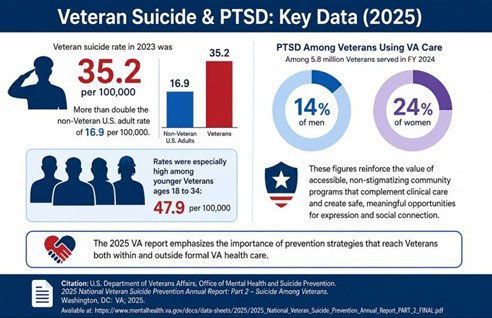
Veteran suicide rate in 2023 was 35.2 per 100,000, more than double the non-Veteran U.S. adult rate of 16.9 per 100,000. Rates were especially high among younger Veterans ages 18 to 34, at 47.9 per 100,000. The same report emphasizes the importance of prevention strategies that reach Veterans both within and outside formal VA health care.
PTSD remains a significant concern among Veterans who use VA care. The VA National Center for PTSD reports that, among 5.8 million Veterans served in fiscal year 2024, approximately 14% of men and 24% of women had a PTSD diagnosis. These figures reinforce the value of accessible, non-stigmatizing community programs that complement clinical care and create safe, meaningful opportunities for expression and social connection.
First Responders: Occupational Trauma and Barriers to Help
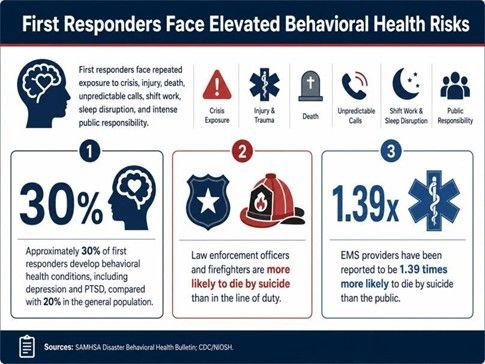
First responders face repeated exposure to crisis, injury, death, unpredictable calls, shift work, sleep disruption, and intense public responsibility. SAMHSA's disaster behavioral health bulletin estimates that approximately 30% of first responders develop behavioral health conditions, including depression and PTSD, compared with 20% in the general population. CDC/NIOSH further notes that law enforcement officers and firefighters are more likely to die by suicide than in the line of duty, and that EMS providers have been reported to be 1.39 times more likely to die by suicide than the public.
A 2025 systematic review of suicidal behaviors among disaster responders found that suicide risk among first responders is shaped by repeated trauma exposure, PTSD, depression, workplace burnout, stigma, access barriers, and the need for occupation-specific supports. The review identified peer support, routine screening, trauma-focused approaches, and organizational destigmatization as important components of prevention.
Why a Music Program Fits the Need
A music-based program is not a replacement for clinical care, crisis response, or trauma treatment. Its value is different and complementary: it gives participants a low-barrier, strengthsbased way to reconnect with others, experience mastery, tell their stories, and be seen in a role beyond what they have endured or provided for others.
Current research supports this direction. A 2024 systematic review in the Journal of Mood & Anxiety Disorders found that music interventions for adults with PTSD symptoms are promising, with 13 of 14 reviewed studies reporting decreases in PTSD symptoms. The review also noted that music may
affect autonomic dysregulation associated with PTSD and can be delivered in scalable, flexible formats. For WFCFA's program, this aligns with the observed participant gains in emotional well-being, confidence, self-expression, and peer connection.
- Music creates a safe shared activity before participants are asked to talk about difficult experiences.
- Instrument learning builds mastery, confidence, and pride through visible progress.
- Songwriting offers a structured, creative way to express stories, emotions, memory, humor, grief, and resilience.
- Peer-supported groups reduce isolation and normalize help-seeking among people who may otherwise avoid traditional support settings.
- Public or informal performance can restore identity, purpose, and connection to the wider community.
Program Overview
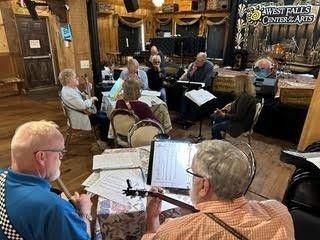
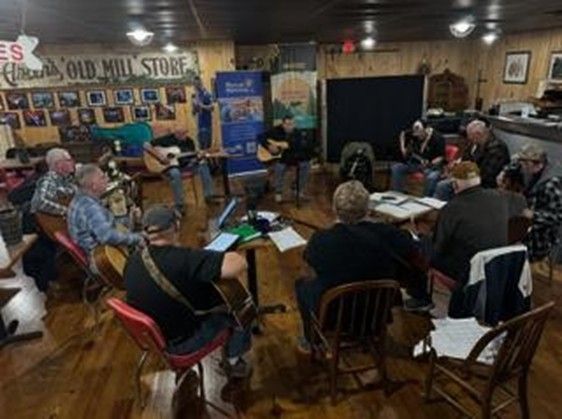
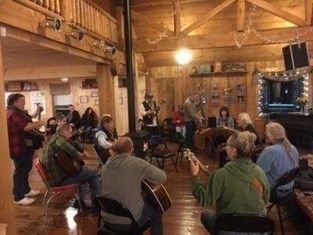
The Veterans and First Responders Music Program uses music as a tool for healing, connection, and self-expression among those who have served their communities and country. Participants learn guitar, ukulele, or harmonica in small, peer-supported groups led by professional musicians, many of whom are Veterans themselves. The program includes instruction, practice, performance opportunities, and a songwriting component that helps participants translate life experience into music.
The program's design is intentionally relational. Participants are not treated as passive recipients of services. They are learners, musicians, storytellers, peers, and community members. This design directly addresses several needs identified in the research: culturally responsive supports, meaningful connection, safe spaces for expression, and stigma-reducing pathways to well-being.
- Small-group instruction that builds skill and confidence over time.
- Peer support and camaraderie among Veterans and/or first responders.
- Professional musician instruction, including instructors with lived Veteran experience.
- Opportunities for songwriting, storytelling, and performance.
- Connection to community, Veteran, and supportive services through a trusted arts-based setting.
Key Outcomes and Impact
The 2025 Annual Performance Report documents exceptional participant-reported outcomes. Across every measured question, 100% of participants agreed or strongly agreed with the statement. These results are especially important because they align with the program's core theory of change: music participation can reduce isolation, strengthen emotional well-being, build confidence, create expressive pathways, and connect participants to supports.
100%
Connection to other Veterans and/or First Responders
100%
Improved emotional well-being
100%
Confidence and pride in abilities
100%
Meaningful expression of experiences or emotions
100%
Supported and encouraged by peers
100%
Aware of community or Veteran services
100%
Safe, respected, and understood
100%
Positive impact on life and future outlook
Taken together, these measures show a program that is doing more than teaching instruments. The data suggest that participants experience the program as emotionally supportive, socially connecting, and personally meaningful. In a population where stigma, isolation, and occupational culture may reduce help-seeking, this combination is particularly powerful.
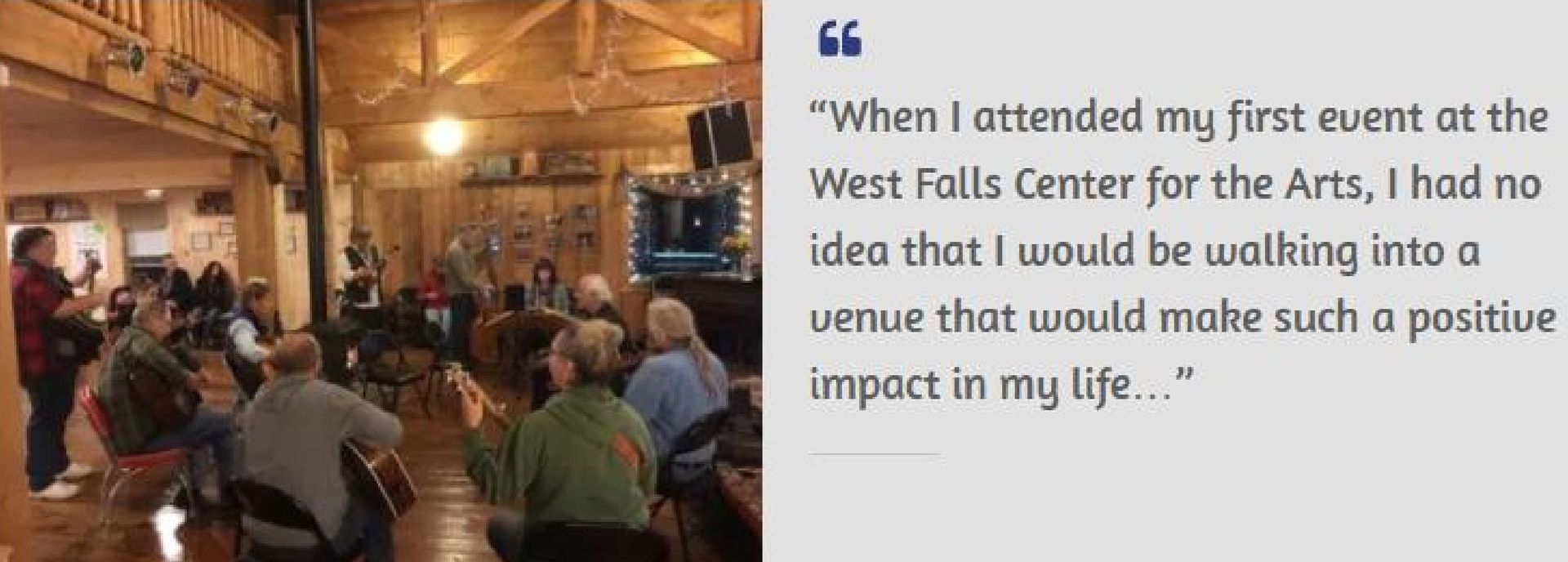
Participant Voice: "All my life I have wanted to play an instrument. Finally with the Center's program, talented instructors and very supportive comrades, I'm doing it!! And it feels so good!!!"
Participant Experience: What the Outcomes Mean
Connection
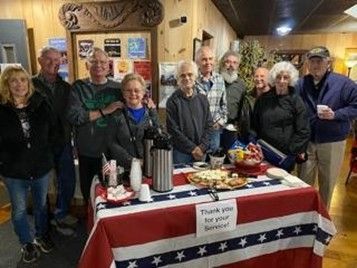
Every respondent reported feeling more connected to other Veterans and/or first responders because of the program. This is one of the program's most important outcomes. Connection is a protective factor that can counter the isolation, role loss, and emotional distancing often experienced after military service, retirement, injury, loss, or repeated exposure to trauma.
Emotional Well-Being
Every respondent reported improved emotional wellbeing. The program appears to create a structured setting where positive emotion, shared
accomplishment, and belonging can accumulate over time. This is consistent with research describing the promise of music interventions for PTSD symptoms, stress, and emotional regulation.
Confidence, Pride, and Identity
Every respondent reported that the program helped build confidence and pride in their abilities. Learning an instrument is concrete and visible: participants can hear improvement, receive encouragement, perform with others, and reclaim the experience of growth. For individuals who may carry trauma, grief, injury, or transition stress, this kind of mastery can be deeply restorative.
Expression and Storytelling
Every respondent agreed that the program helped them express personal experiences or emotions in a meaningful way. This is particularly important for Veterans and first responders, who may have learned to contain emotion in order to perform under pressure. Songwriting and performance provide a structured, dignified pathway for expression without requiring a clinical setting.
Alignment with WFCFA's Broader Impact
WFCFA's 2025 Annual Performance Report shows a strong organizational platform for scaling programs that combine arts access, wellness, and community connection. In 2025, WFCFA served an estimated 20,000 attendees through 240 concerts and programs, maintained a 4.7 out of 5 overall audience rating for the fourth consecutive year, and secured major capital investments including the Outdoor Concert Cove. These accomplishments strengthen the environment in which the Veterans and First Responders Music Program can grow.
The Veterans and First Responders Music Program fits squarely within WFCFA's identity as an inclusive community arts organization serving vulnerable and underserved populations. Like Musical Memories Cafe, the program demonstrates how WFCFA can translate the healing power of music into measurable outcomes, local relationships, and scalable community impact.
Sustainability and Next Steps
The 2025 outcomes provide a strong foundation for continued program development. The next stage should preserve the elements that participants clearly value: peer support, safety, skilled instruction, performance opportunities, and creative self-expression. As the program grows, WFCFA can strengthen documentation, deepen partnerships, and use annual evaluation to demonstrate change over time.
- Maintain small, peer-supported cohorts to protect trust and psychological safety.
- Continue recruiting instructors and guest artists who understand Veteran and first responder culture.
- Expand songwriting and storytelling as a signature feature of the program.
- Build formal referral pathways with Veteran service organizations, first responder associations, county Veterans departments, behavioral health partners, and community groups.
- Track annual outcomes using consistent survey items, participant stories, retention, attendance, and service connection measures.
- Use the Outdoor Concert Cove and WFCFA venue capacity to create celebratory performances that honor service while reducing stigma around support and healing.
Conclusion
The Veterans and First Responders Music Program is a high-impact, mission-aligned response to a documented community need. Current research shows that Veterans and first responders face elevated risks related to PTSD, depression, suicide, isolation, stigma, and repeated trauma exposure. The program addresses these needs through a strengths-based model that is approachable, dignified, and deeply human.
The 2025 participant outcomes are compelling: 100% agreement across every measured outcome, including connection, emotional well-being, confidence, expression, peer support, service awareness, safety, and future outlook. These results position the program as a distinctive WFCFA model that combines the credibility of community arts, the power of music, and the healing force of peer connection.
Looking ahead, WFCFA has an opportunity to further establish the Veterans and First Responders Music Program as a regional model for arts-based well-being. Its value lies not only in what participants learn to play, but in what the program helps them recover: voice, confidence, belonging, and a renewed sense that their stories matter.
References
- Centers for Disease Control and Prevention, National Institute for Occupational Safety and Health. (2021). Suicides among first responders: A call to action. https://www.cdc.gov/niosh/bulletin/2021/suicides-first-responders.html
- Moslehi, S., Tavan, A., Khezeli, M., Soleimanpour, S., & Narimani, S. (2025). Silent crisis on the frontlines: A systematic review of suicidal behaviors among disaster responders - epidemiology, risk pathways, and evidence-based interventions. Scandinavian Journal of Trauma, Resuscitation and Emergency Medicine, 33, 161. https://doi.org/10.1186/s13049-025-01479-z
- Substance Abuse and Mental Health Services Administration, Disaster Technical Assistance Center. (2018). First responders: Behavioral health concerns, emergency response, and trauma. https://www.samhsa.gov/sites/default/files/dtac/supplementalresearchbulletinfirstresponders-may2018.pdf
- U.S. Department of Veterans Affairs, National Center for PTSD. (2025). How common is PTSD in Veterans? https://www.ptsd.va.gov/understand/common/common_veterans.asp
- U.S. Department of Veterans Affairs, Office of Mental Health and Suicide Prevention. (2025). 2025 National Veteran Suicide Prevention Annual Report, Part 2: Report findings. https://www.mentalhealth.va.gov/docs/datasheets/2025/2025_National_Veteran_Suicide_Prevention_Annual_Report_PART_2_FINAL.pdf
- Wang, C. C., Emrich, M., Rives, H., Ovalles, A., Wright, D., Wyka, K., & Difede, J. (2024). Music interventions for posttraumatic stress disorder: A systematic review. Journal of Mood & Anxiety Disorders, 6, 100053. https://doi.org/10.1016/j.xjmad.2024.100053
- West Falls Center for the Arts. (2025). West Falls Center for the Arts 2025 Annual Performance Report. Internal program evaluation report.
- West Falls Center for the Arts. (2025). Musical Memories Cafe 2025 Annual Report. Internal program evaluation report.
Graphics Citations
1. First Responders Behavioral Health Risks graphic
- Substance Abuse and Mental Health Services Administration. (2018). First responders: Behavioral health concerns, emergency response, and trauma. Disaster Technical Assistance Center Supplemental Research Bulletin. U.S. Department of Health and Human Services. (SAMHSA)
- National Institute for Occupational Safety and Health. (2021). Suicides among first responders: A call to action. Centers for Disease Control and Prevention. (CDC)
2. Veteran Suicide & PTSD graphic
- U.S. Department of Veterans Affairs, Office of Mental Health and Suicide Prevention. (2025). 2025 National Veteran Suicide Prevention Annual Report: Part 2 — Suicide among Veterans. U.S. Department of Veterans Affairs.
(Mental Health VA)
- U.S. Department of Veterans Affairs, National Center for PTSD. (2025). How common is PTSD in Veterans?
(ptsd.va.gov)
